

From the Ground Up: Concrete Testing On-Site
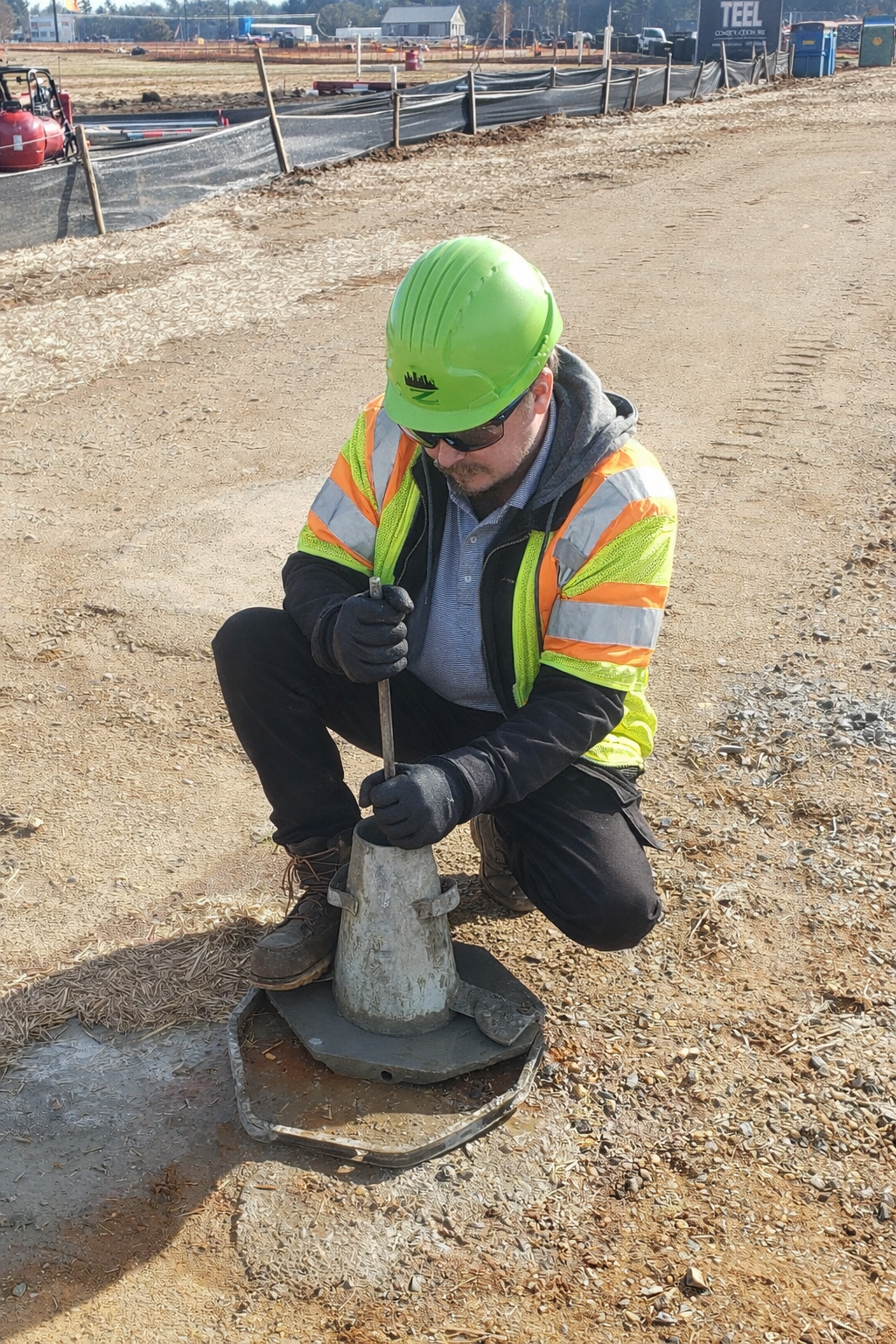
Concrete performance isn’t decided when it hardens.
It starts while the concrete is still fresh.
Why Concrete is Tested in the Field
Once earthwork is complete and foundations, walls, or slabs are ready to be placed, the focus shifts to verification—confirming that the concrete delivered to the site matches project specifications.
That’s where field concrete testing begins.
What Field Technicians Test
During placement, our field technicians test key properties of fresh concrete, including slump, temperature, air content, mix time, and approved additives. These checks help confirm the concrete can be placed properly and will perform as intended as it cures.
Air content is measured using different methods depending on the mix. Normal weight concrete is typically tested using pressure meters, while lightweight concrete is tested with volumetric methods better suited to that material. These tests provide immediate feedback while adjustments can still be made.
How Strength Is Verified
Because concrete continues to gain strength over time, samples of fresh concrete are collected during placement. Cylinders or beams are cast in the field and transported to the laboratory for strength testing in the days and weeks that follow.
Field testing connects what’s happening on site to long-term performance. It helps identify issues early—before they’re locked into the structure and covered by the next phase of construction.
Come Build on Our Foundation
From the Ground Up is a series exploring the engineering and materials testing processes that support safe construction across Central Virginia.
Explore more in the series
Masonry, Grout, and Mortar Testing