

From the Ground Up: Concrete Testing – Lab
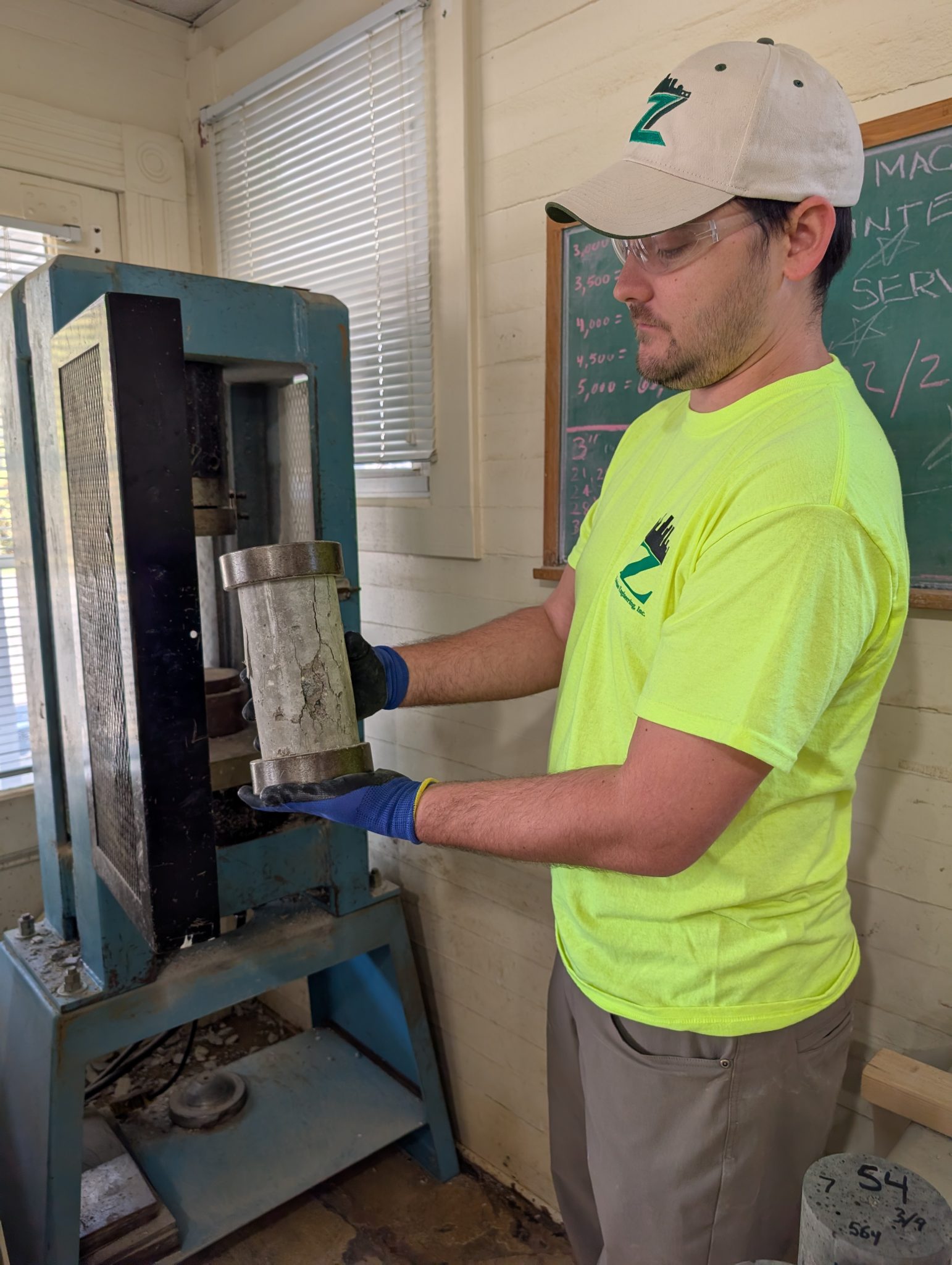
Concrete may be placed in a day—but its strength develops over time.
Why Concrete Is Tested in the Lab
After samples are collected in the field, concrete cylinders and beams are cured under controlled conditions and tested in the laboratory to measure how the material gains strength as it hardens. This process confirms that the concrete continues to perform as expected well after placement.
At Zannino Engineering, laboratory testing involves breaking concrete cylinders or beams at specified intervals to measure compressive or flexural strength. These results are compared to project requirements to verify that the concrete meets or exceeds the strength assumed during design.
What the Tests Confirm
Laboratory testing provides critical confirmation for contractors, engineers, and owners. It supports construction sequencing decisions—such as form removal or additional loading—and offers confidence that the structure will perform safely over the long term.
Come Build on Our Foundation
From the Ground Up is a series exploring the engineering and materials testing processes that support safe construction across Central Virginia.
Explore more in the series